
Equities Looking Past Bond Market Volatility for Now
In August, markets continued to exhibit resilience thanks to robust corporate earnings and sustained exuberance in AI infrastructure investment. Investor sentiment remained largely upbeat despite a resurgence in the price of oil amidst renewed geopolitical uncertainty, and a more ambiguous path for interest rates. September brings an array of events that will dictate the macro backdrop into year-end: Chinese President Xi Jinping and President Trump are set to meet; there is a Federal Reserve rate decision with a new Summary of Economic Projections; and an ECB meeting.
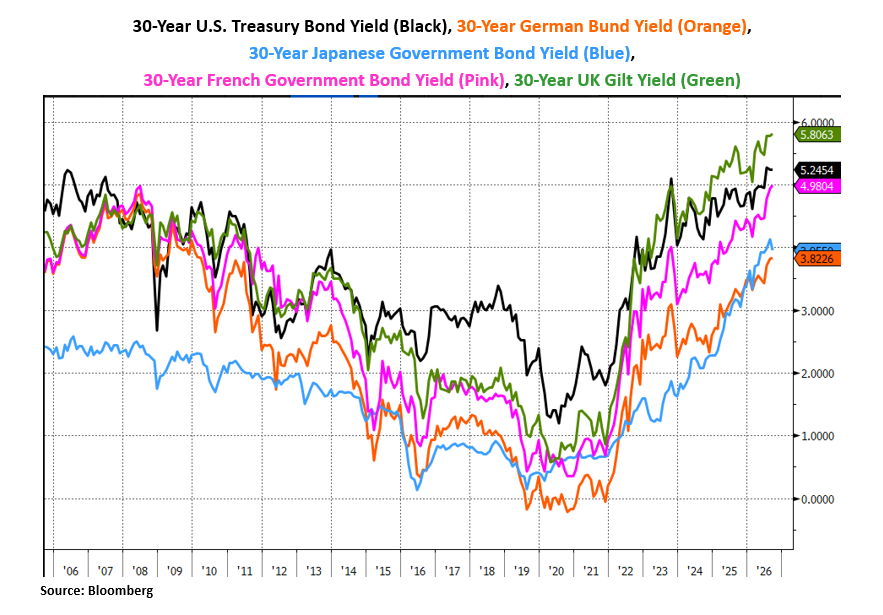
The 30-Year U.S. Treasury yield rose from 4.9% at the end of June to 5.3% by August 18th, the highest level since 2007. On August 19th, Treasury Secretary Scott Bessent announced an expansion of buybacks of long Treasuries from $2 billion to $4 billion. While rates dropped in the immediate wake of the announcement, the dip was short-lived as the increase in buybacks is exceedingly small given the size of the Treasury market, and market participants largely dismissed it as a political exercise. The trend of investors demanding higher returns for long-term government debt is not unique to the U.S., as bond markets in Japan, the UK, France, and Germany are all exhibiting similar volatility and illustrate investors’ underlying trepidations regarding sticky inflation and unrestrained deficit spending.
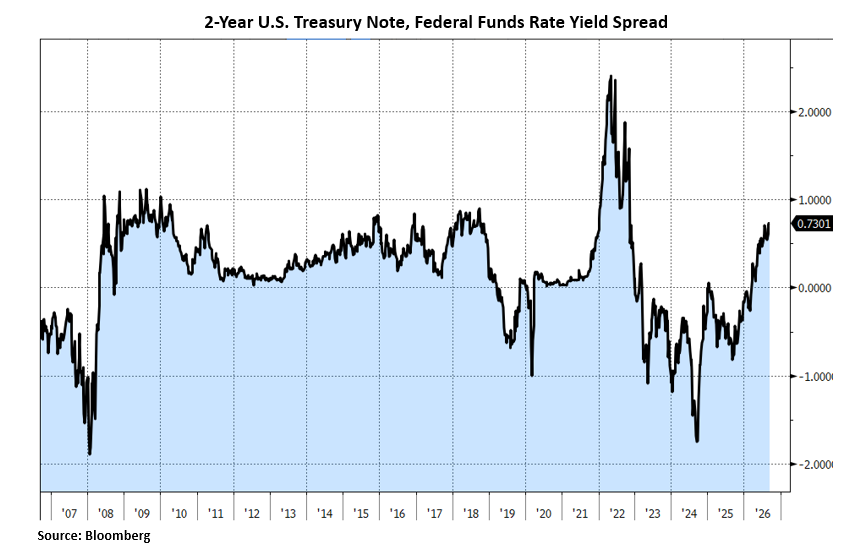
Federal Reserve Chairman Warsh spoke at the Fed’s Jackson Hole conference at the end of the month. The market took a hawkish message away from his speech, and he assured investors he’s committed to getting inflation under control. Last week’s U.S. job numbers for August, which were well above estimates, further lifted expectations of a rate hike at the Fed’s September meeting, which now stands at 61%. For now, the markets seem to believe Warsh’s anti-inflation enthusiasm. The spread between the 2-Year U.S. Treasury note yield and the Federal Funds rate serves as a market indicator of anticipated interest rate changes and broad economic conditions. A higher spread may suggest expectations of rising interest rates, and while the spread is not currently high in absolute terms, it has widened out fairly quickly. Fed Governor Waller, however, signaled last week that he would support holding rates steady at the Fed’s next meeting amid improving price pressures. The Fed is in the unadmirable position of trying to deliver price stability with an administration that is keenly interested in lower rates.
Policymakers will likely be key contributors to volatility this fall as midterm elections approach, ongoing geopolitical conflicts remain, and tariffs have re-emerged. Market participants will be watching yields and oil closely as elevated levels in both will eventually pressure equity valuations. In fixed income, stubborn inflation, widening deficits, and interventions to suppress long-end yields reinforce our cautious duration outlook that we’ve maintained for some time. Maintaining a balanced, disciplined approach remains the most effective method to traverse a dynamic market environment.
Ryan Babeuf, CFA
Market Strategist
Ryan.Babeuf@EdgeWealth.com
Past performance does not guarantee future results. Different types of investments involve varying degrees of risk, and there can be no assurance that the future performance of any specific investment, investment strategy, or product directly or indirectly referenced will be profitable, equal any corresponding indicated historical performance level, or be suitable for your portfolio. Due to various factors, including changing market conditions, the content may no longer be reflective of current opinions or positions. This content does not serve as the receipt of, or as a substitute for, personalized investment advice from Edge Wealth Management, LLC. If you have any questions about the applicability of any content to your individual situation, we encourage you to consult with the professional advisor of your choosing. A copy of our current written disclosure statement discussing our advisory services and fees is available for review upon request or by selecting “Part 2 Brochures” here.