
New Fed Chair Warsh Inherits a Complicated Rate Backdrop
The major indices have continued to perform well on the back of robust corporate earnings, strong risk-on sentiment to “all things AI,” and a modest stabilization in the Middle East conflict. The headline gains, however, concealed how narrow the leadership amongst stocks has become. The S&P Technology sector gained ~16% in the month of May and did nearly all of the index’s heavy lifting, while eight of the eleven S&P sectors were negative for the month.
The U.S. economy has demonstrated resilience as the employment report for May was exceptionally strong, with total job growth far exceeding expectations as the unemployment rate held steady, demonstrating perhaps one of the most distinct signs yet that the labor market may be breaking out of a prolonged period of meager hiring. In addition, the March and April payroll figures were revised higher, marking the strongest three-month advance in more than two years.
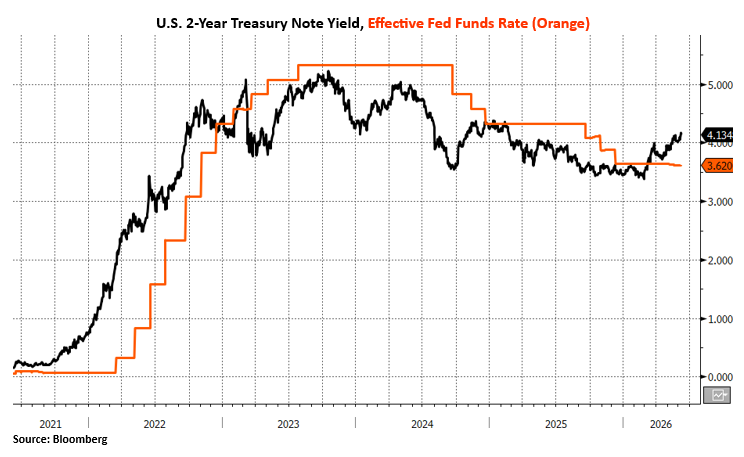
New Fed Chair, Kevin Warsh, will head his first policy meeting on June 16-17. The expectation is for the central bank to keep the benchmark rate unchanged at that meeting, but market participants have increased the odds of a rate hike in the latter half of this year. The Treasury market has shifted as yields have moved higher due to increasing inflation expectations. U.S. two-year notes have risen to their highest level in more than a year, and at around 4.15% the two-year yield trades meaningfully above the Fed’s current policy band of 3.5%-3.75%, a deviation that began in March. The Treasury market is currently signaling to the Fed that rates need to rise in order to temper inflation pressures.
While much of the selloff in bonds can be credited to rising inflation expectations as the conflict in Iran and its accompanying oil shock continues, there is also a compelling argument that the massive amount of capital that is being pumped into the AI infrastructure buildout is partly to blame. The magnitude of capital being deployed into the entire AI ecosystem is staggering and still accelerating. This may usher in a new rate regime as investors continue to redirect funds across the capital structure.
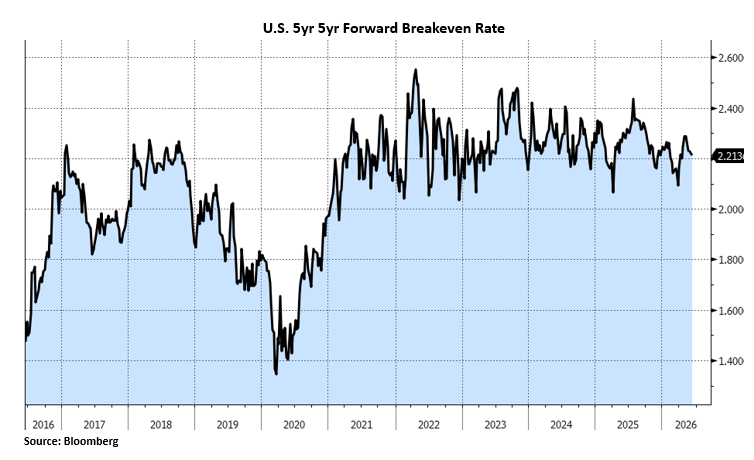
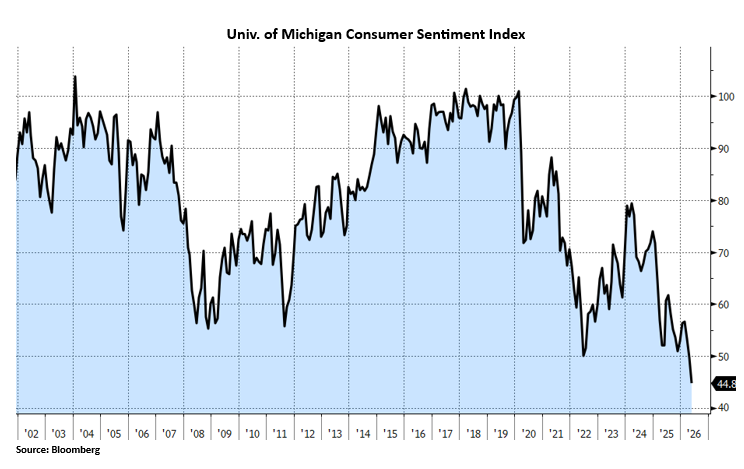
Looking ahead, markets will continue to focus on labor/inflation data, the FOMC meeting, and developments in the Middle East. Key risks center around any renewed oil shocks, persistent inflation, and policy uncertainty. Consumer sentiment has been driven to a record low as headwinds from higher energy costs and inflation present significant concerns. The narrowing leadership amongst stocks is noteworthy as any falter in AI infrastructure demand, or the timeline to monetization would compress multiples quickly, and temper the rapid rise in earnings expectations that we have witnessed. Equities continue to look past the message from the long end of the yield curve, but that could reverse course if any part of the narrow support slips.
Ryan Babeuf, CFA
Market Strategist
Ryan.Babeuf@EdgeWealth.com
Past performance does not guarantee future results. Different types of investments involve varying degrees of risk, and there can be no assurance that the future performance of any specific investment, investment strategy, or product directly or indirectly referenced will be profitable, equal any corresponding indicated historical performance level, or be suitable for your portfolio. Due to various factors, including changing market conditions, the content may no longer be reflective of current opinions or positions. This content does not serve as the receipt of, or as a substitute for, personalized investment advice from Edge Wealth Management, LLC. If you have any questions about the applicability of any content to your individual situation, we encourage you to consult with the professional advisor of your choosing. A copy of our current written disclosure statement discussing our advisory services and fees is available for review upon request or by selecting “Part 2 Brochures” here.